ModuleNotFoundError: No Module Named ‘openai’

Encountering ModuleNotFoundError: No module named ‘openai’ in Python can be frustrating, especially when working with ChatGPT, OpenAI APIs, or AI-based projects. This error typically indicates that the OpenAI library is either not installed, installed in the wrong environment, or not accessible to the Python interpreter. In this guide, we will cover: By the end of … Read more

How to Open Jupyter Notebook from CMD: A Step-by-Step Guide

Jupyter Notebook is an essential tool for data science, machine learning, and Python programming. It provides an interactive computing environment where you can write and execute code, visualize data, and document workflows efficiently. One of the most common questions from beginners is how to open Jupyter Notebook from CMD (Command Prompt). In this guide, we … Read more

How to Install Jupyter Notebook: A Step-by-Step Guide

Jupyter Notebook is one of the most widely used tools in the data science and machine learning community. It provides an interactive environment for writing and executing Python code, visualizing data, and documenting workflows. Whether you are a beginner or an experienced developer, knowing how to install Jupyter Notebook properly ensures a seamless experience. In … Read more

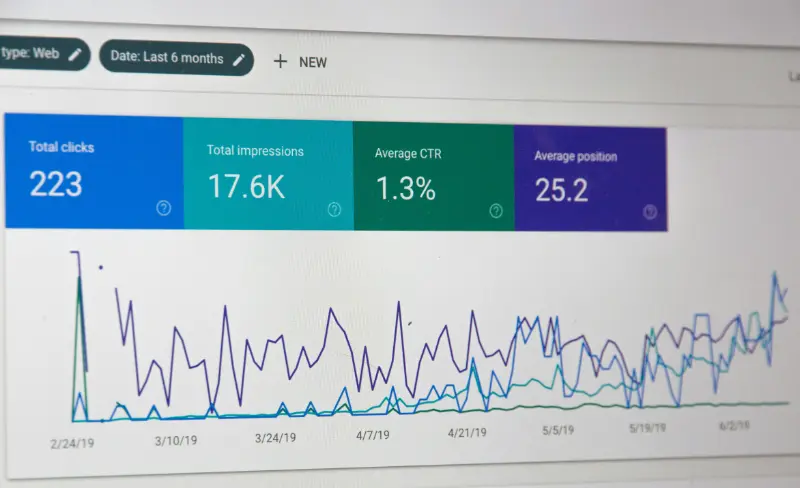
Machine Learning Techniques for SEO Optimization

Search Engine Optimization (SEO) is a constantly evolving field, and machine learning (ML) is playing an increasingly significant role in shaping how search engines rank websites. From content optimization to keyword research, search intent analysis, and predictive analytics, machine learning enhances SEO strategies by automating processes, uncovering hidden patterns, and improving user experience. This article … Read more

How to Fine-Tune CNNs for Small Datasets

Convolutional Neural Networks (CNNs) have revolutionized image classification, object detection, and other computer vision tasks. However, training CNNs from scratch requires massive datasets and extensive computational resources. When working with small datasets, fine-tuning pre-trained CNNs offers a powerful alternative. This approach leverages knowledge from large-scale datasets to improve performance on a new, smaller dataset. In … Read more

Difference Between LLM and Traditional Machine Learning Models

Machine learning (ML) has evolved significantly over the years, with deep learning and large language models (LLMs) now dominating the field. Understanding the difference between LLM and traditional machine learning models is crucial for data scientists, machine learning engineers, and AI researchers. In this article, we’ll explore the key distinctions, advantages, limitations, and use cases … Read more

Optimizing LLM Inference for Low-Latency Applications

Large Language Models (LLMs) have transformed industries by enabling powerful AI-driven applications, from real-time chatbots to AI-powered search engines. However, deploying LLMs in real-world scenarios presents a key challenge: latency. Low-latency applications, such as voice assistants, real-time recommendation systems, and financial trading bots, require near-instantaneous responses to ensure a seamless user experience. Optimizing LLM inference … Read more

Lazy Learning Algorithms: Benefits and Use Cases

Machine learning models generally fall into two categories: eager learning and lazy learning. While eager learning algorithms build a model during the training phase and generalize from training data, lazy learning algorithms defer the learning process until a prediction is required. Instead of creating an explicit model, lazy learning algorithms store training data and perform … Read more

How to Speed Up PyTorch Model Training with Data Parallelism

Training deep learning models efficiently is a challenge, especially when dealing with large datasets and complex architectures. PyTorch provides built-in functionalities to leverage multiple GPUs and accelerate model training using data parallelism. By distributing data across multiple GPUs, data parallelism allows for faster training times and better resource utilization. In this article, we will explore … Read more

Explainable AI in Drug Development

Artificial intelligence (AI) is revolutionizing drug development by accelerating research, optimizing clinical trials, and predicting drug efficacy. However, many AI-driven drug discovery models function as “black boxes,” making it difficult for researchers, regulators, and clinicians to understand how these models generate predictions. Explainable AI (XAI) in drug development aims to bridge this gap by improving … Read more